Your cart
There are no more items in your cart

Dog collars: types, materials and how to measure the neck correctly
Posted on2026-05-19
by

If you’ve ever walked into the shop with your dog to buy a collar and left with doubts —“is this too tight?”, “collar or harness?”, “leather or fabric?”— you know what I mean. Choosing a dog collar seems like the simplest thing in the world and yet it’s the accessory that raises the most questions at Mascoboutique. Let’s make it easy.
Collar or harness? When to use each one
This is, without question, the question I get asked most at the counter. And the short answer is: for walking, almost always a harness. The collar has its place, but it’s not for pulling.
I explained it in detail in the blog article on how to choose a harness for a small dog, but here I’ll sum it up from the other side, the collar’s. A well-fitted collar is perfect for three things: to carry your dog’s identification tag (with name and phone number, no one argues with that), to clip the lead on once your dog is an adult, walks well and doesn’t pull, and for general visual identification. There the collar beats the harness because it weighs less, goes on and off faster and, honestly, looks nicer.
Where the collar loses is on the walk with dogs that pull, small dogs and dogs with a delicate windpipe. When a yorkie, a toy poodle or a chihuahua pulls on the collar, the force concentrates right on the throat. That, repeated every walk, is a serious tracheal problem in the medium term. In brachycephalic dogs (French bulldog, pug, shih tzu) the same. For those dogs, always a harness. And for the rest: collar for identification, harness (or a well-fitted collar) for walking, depending on the dog.
If your dog is small or you have doubts about the harness, I recommend you also read our complete guide on how to choose a harness. The two go hand in hand: many customers come in thinking it’s one or the other when, in reality, there’s room at home for both.
Types of dog collars
Boiling it down to what really matters, at Mascoboutique we work with three families of collars. They aren’t all the ones that exist —if you’re after something very specific like a martingale collar for a greyhound, you’re better off at a sighthound specialist— but these three cover 95% of the dogs that come through the door.
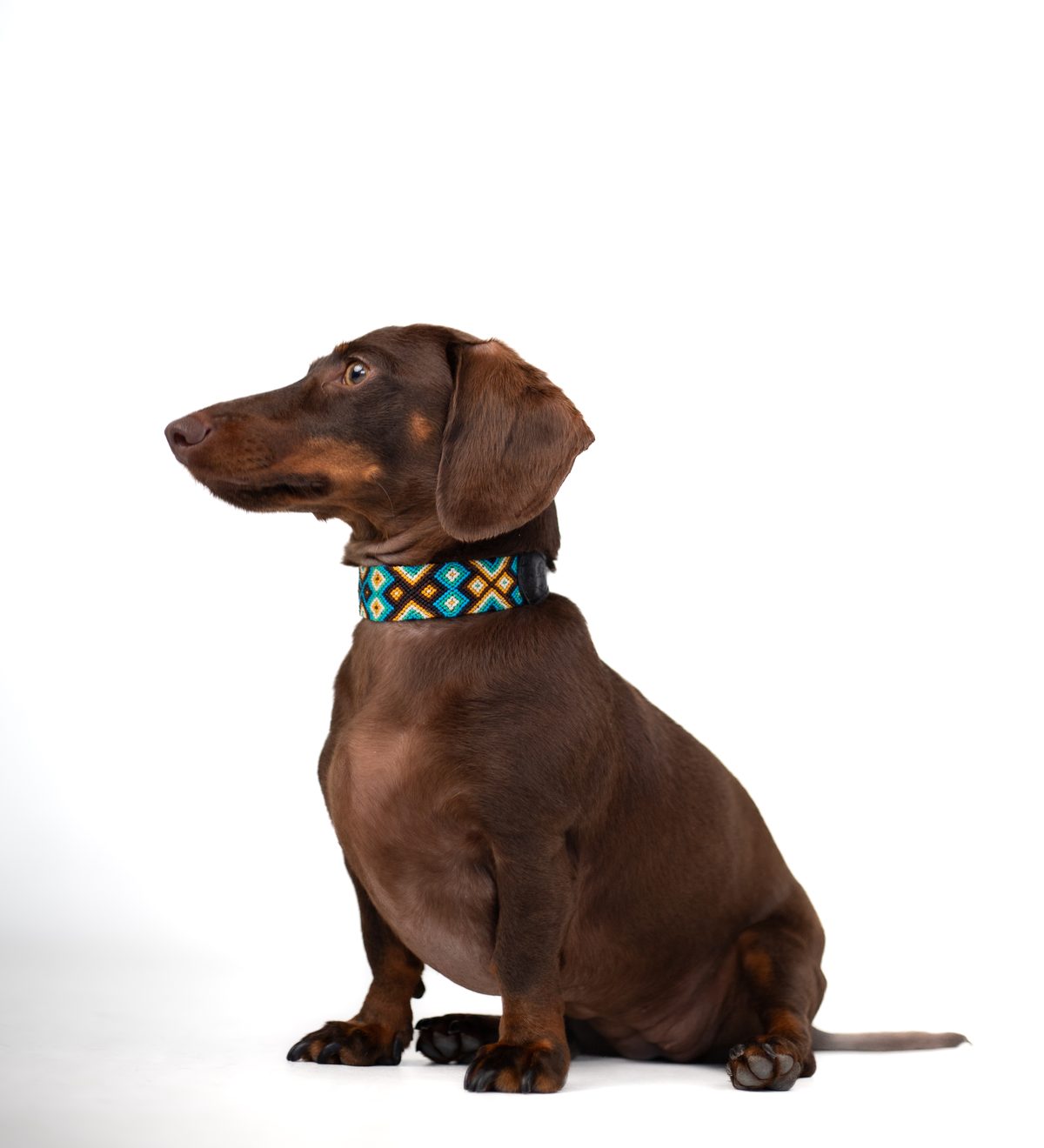
Adjustable flat collar
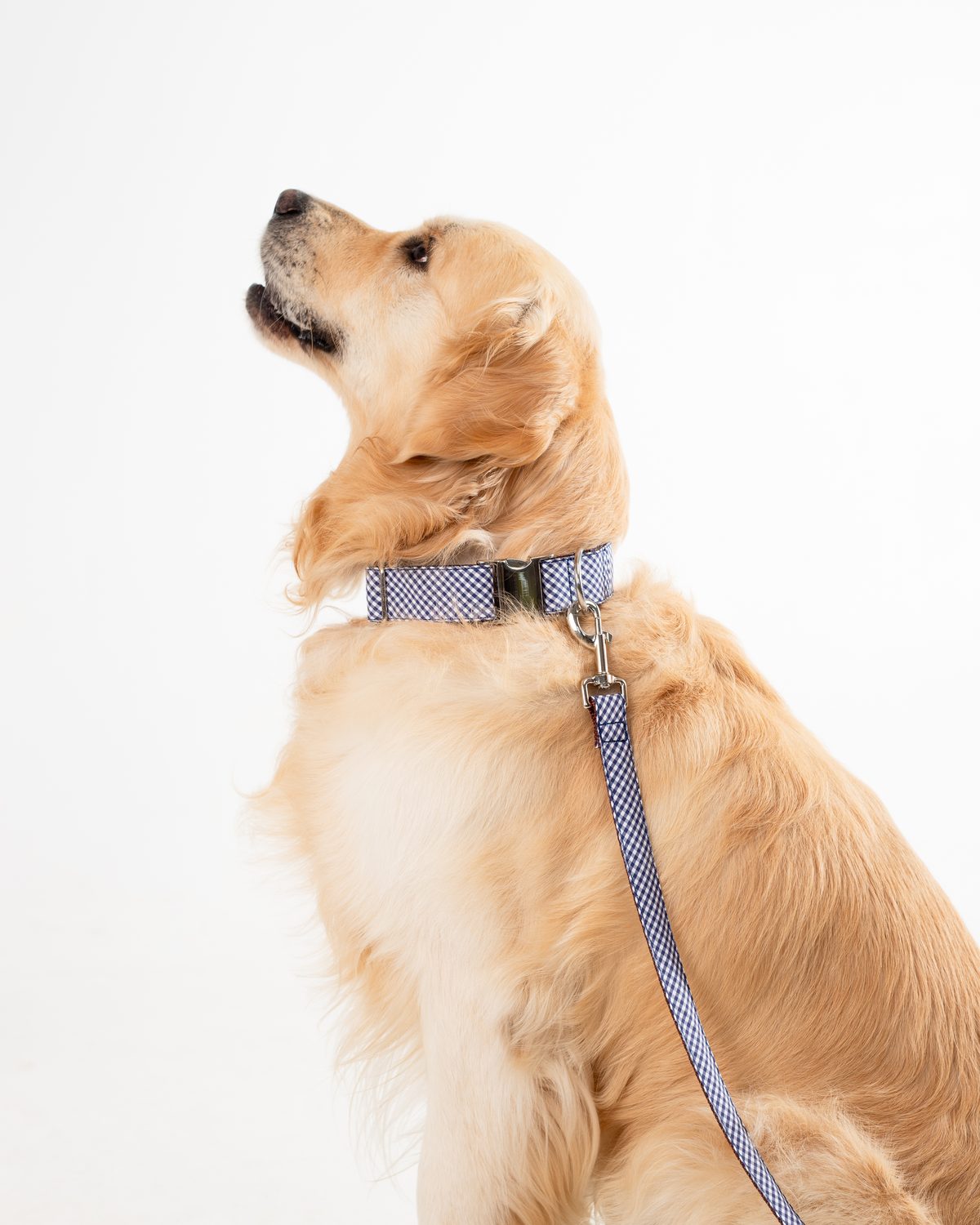
The classic collar, but well made. A strip of fabric, canvas, cotton or nylon with a plastic or metal buckle and a size adjustment in one or two positions. It’s the everyday collar: light, easy to put on, easy to wash and, if it’s well made, it lasts for years.
I recommend them when your dog walks without pulling, when you need a collar for home with the ID tag, or when you want two collars (a pretty one for walks, a comfy one for home). At Mascoboutique we have very light models designed for small dogs and sturdier ones for medium and large dogs.
Within the adjustable flat collars you have to choose the type of fastening, and there’s no universal answer here. The click-buckle ones (that plastic clasp you press and release with two fingers) are the quickest to put on and take off, ideal for people who walk the dog several times a day. The belt-style buckle ones —the traditional one, with a metal pin— are more elegant, take more pulling and allow finer adjustment between holes, but they take a few seconds longer each time. My recommendation: click for everyday use with small or medium dogs; buckle when you want a leather or canvas collar with a more refined finish.
Leather collar
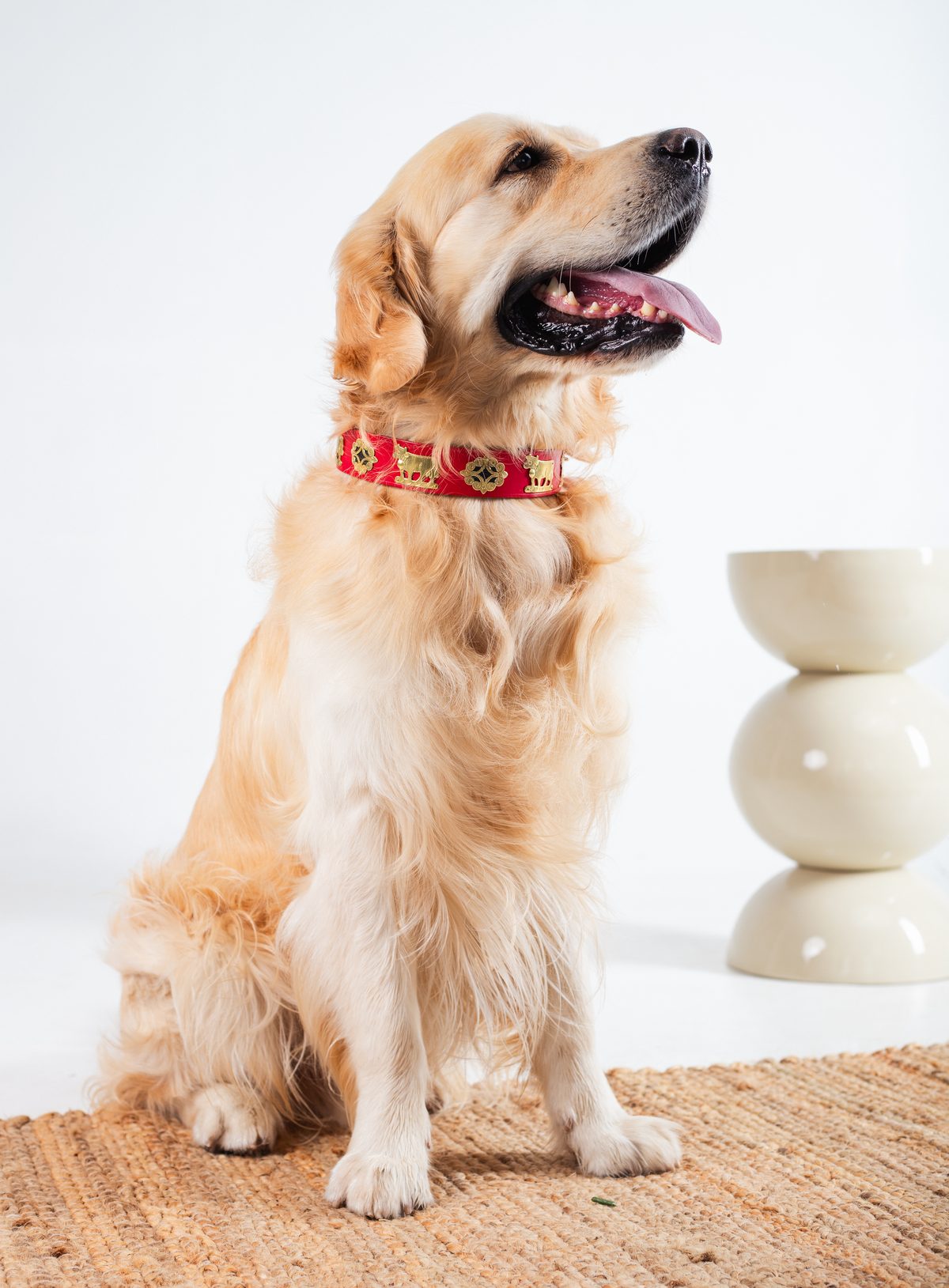
A good leather dog collar is another world. It’s the premium option: Italian or Spanish leather, hand stitching, quality hardware and a finish that withstands years of use, gaining character over time like a good wallet or a pair of shoes.
I recommend them when you want to invest in a collar that lasts literally your dog’s whole life, when you like the artisan detail and, especially, for adult dogs with an established walking routine. Leather is very resistant to the odd tug and doesn’t deform. But careful: leather isn’t the best option for puppies that are still chewing everything, nor for dogs that swim at the beach daily (salt water dries it out). If this family interests you, you can see our whole selection of leather dog collars.
Flea collar
This is a category apart: it’s not a walking collar, it’s a health accessory. It carries an active ingredient (in the most common ones, imidacloprid + flumethrin, the Seresto type) that releases slowly and protects the dog from fleas and ticks for several months, normally six to eight depending on the brand.
I recommend them when the dog spends time in rural areas, in parks with lots of grass or where there’s a tick risk. For a strictly city dog, with short walks and a very controlled area, sometimes it can be managed with pipettes depending on the season — but it has to be assessed case by case with the vet.
An important note: we don’t carry flea collars on the website, only in our two physical shops in Madrid (Núñez de Balboa, 10 and Gutiérrez Solana, 8). If you’re interested in one and live elsewhere, message us on WhatsApp and we’ll tell you which one suits your dog and how to get it.
Materials: which last, which don’t irritate and which are easiest to clean
When a customer comes in torn between two collars, it’s almost always a question of material. Here’s what I see in the shop after many years recommending:
- Leather (tanned hide). The premium material. It withstands tugs, doesn’t fray and improves with the years. It needs a minimum of care but in return it lasts a decade. If your dog is going to have a single good collar, this is the material.
- Canvas. Thick, sturdy fabric with a natural feel. It gets dirty less than you’d think and, when it does, you brush it or pop it in the washing machine with mild detergent. Best option for dogs that get wet or muddy often. It also takes nice prints.
- Cotton. The kindest to the skin and very pleasant to the touch. It’s the material of collars from brands like Magia Mia: natural cotton webbing with seasonal prints, light and soft. I recommend it for dogs with sensitive skin, for puppies and for small dogs that wear the collar for many hours. The downside: it takes less pulling than leather or nylon.
- Nylon or polyester. The cheapest material and, well made, also very durable. It washes easily and withstands tugs. The drawback is that on dogs with sensitive skin it can rub more than leather or cotton.
- Soft synthetic materials (with padding). Usually on wide collars. A good option for dogs with a delicate neck or reactive skin. The bad part: the padding flattens over time.
My shop expert’s tip: if you’re torn between leather and fabric, ask yourself how dirty your dog gets. Countryside, puddles or beach: canvas or nylon. City dog you want to last years: leather. Reactive skin: cotton.
How to measure your dog’s neck step by step
This is the other mistake I see every week: people buy the collar by eye and it either ends up huge or too tight. Knowing how to measure a dog’s neck takes exactly a minute.
Grab a sewing tape measure (the flexible, fabric kind). If you don’t have one, a piece of string measured afterwards with a ruler works. Pass it around the dog’s neck, right where the collar would sit. Don’t tighten it: leave it comfortable.
That’s the real neck measurement. To get the collar size right, add two to three centimetres. And always check that two flat fingers fit between the collar and the neck: if they fit, it’s well adjusted; if you struggle to fit one, it’s too tight; if three slide in, it’s loose and the dog can slip out.
Puppies: check the size every two or three weeks, especially with a medium or large breed pup. And a shop expert’s tip: if you’re torn between two sizes on an adult dog, go for the larger one — you can always adjust a hole, but if it’s too short there’s no fixing it.
The most common mistakes when choosing a collar
These are the ones I correct most in the shop:
- Buying the puppy’s collar with no room to grow. A leather collar suits a puppy perfectly —no need to rule it out— but buy it thinking about the coming months. The rule in the shop is to buy it so it closes on the first hole: as the dog grows, you move to the second, the third… and the collar lasts six months or more. If you pick it already fitted on the middle hole, you’ll be throwing it out in six weeks.
- Tightening it too much “in case it escapes”. If two fingers fit comfortably, the collar is fine. Tightening more causes chafing and, in small dogs, tracheal problems. A dog that escapes is fixed with proper ID, with a harness if it’s an escape artist, or with training.
- Using a collar to walk a dog that pulls. If your dog pulls on the lead with the collar on, it’s damaging its throat. Switch to a harness and work on “no pulling” in parallel. Not negotiable.
- Forgetting the identification tag. The collar is the natural home for the little tag with name and phone number. Even with a microchip, a visible tag is what lets anyone who finds your dog call you within five minutes. In the shop we have tags engraved on the spot.
- Leaving the collar on at home when it isn’t needed. If your dog is home alone for many hours, better take the collar off. With no one watching, it can get caught on furniture or another dog. Rare but it exists.
Our pick of dog collars at Mascoboutique
When someone comes into the shop looking for a collar, these are the four models I recommend most. They cover practically every situation —from the puppy on a budget to the premium collar that lasts a lifetime.
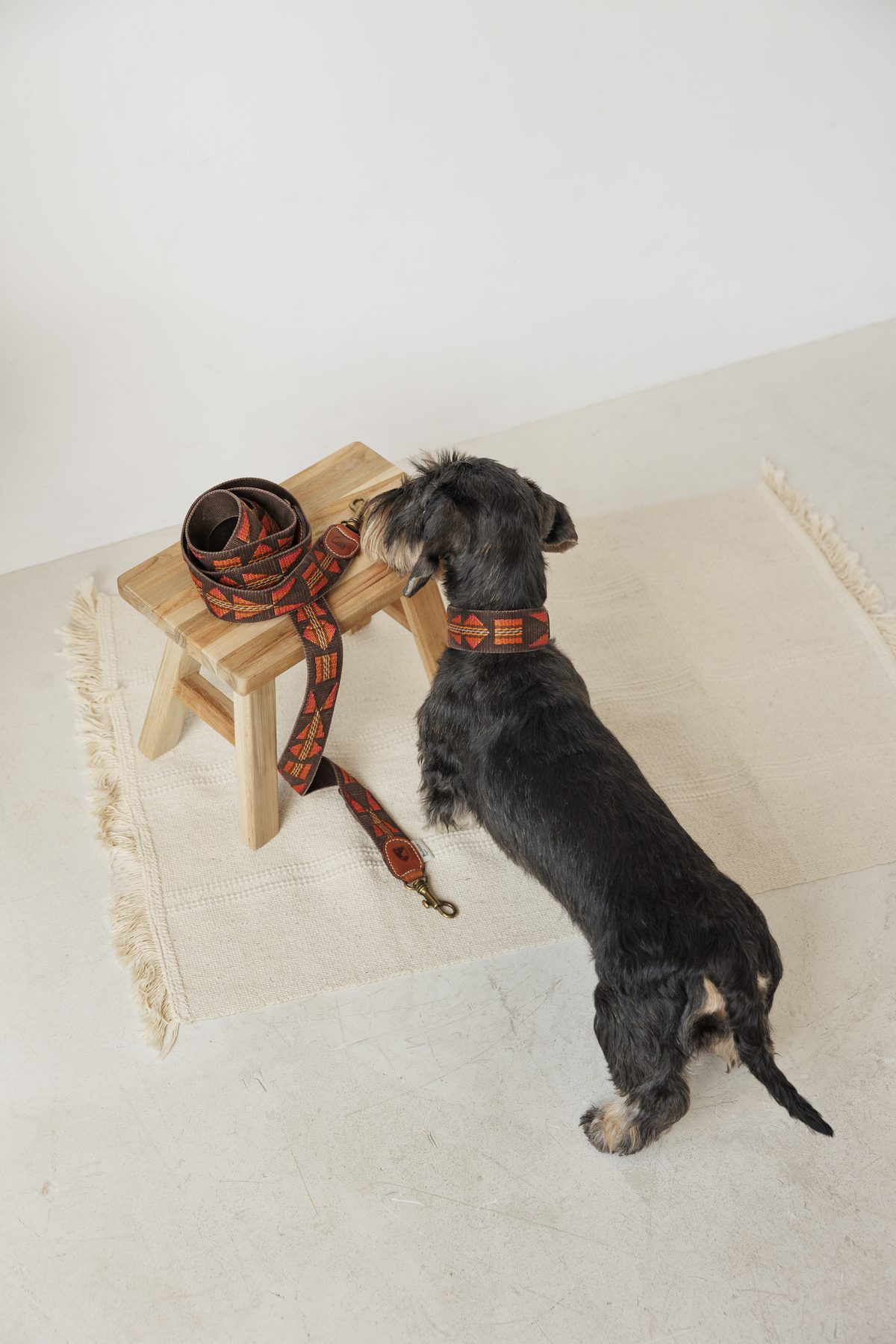
- Collar Fresa y Nata. From the Spanish brand Magia Mia. Our favourite adjustable flat collar for value. Soft, comfortable cotton webbing, a sturdy buckle and a lovely two-tone print. I recommend it for puppies, young dogs and for an everyday collar you can wash without worry. A great first collar.
- Collar Capri Isola. From Buddys Dogwear, handmade in Spain with sturdy canvas. A “boutique” touch that looks perfect on small and medium dogs. I recommend it for city dogs and when you want the collar to match the lead and harness. Summery but valid all year.
- Collar de Cuero Burgundy. From Perro Collection. Genuine leather, personalisable (engrave the dog’s name or phone directly on the hide — which is why it can’t be returned once personalised) and a burgundy that ages beautifully. The collar I recommend when someone wants a single collar for life. For adult dogs.
- Collar Cuero Essential Tabaco. From the Italian brand Carlotta Palermo. Italian leather, medium width, in a gorgeous tobacco tone. The high-end option for small and medium dogs. I choose it when a customer wants something “from the good stuff” with classic Italian aesthetics.
If you want more options, take a look at our whole selection of dog collars, or if your dog is very small or very large, check the categories of collars for small dogs and collars for large dogs. If in doubt, message us on WhatsApp and we’ll help you choose.
In short
If you want to get your dog’s collar right and not end up buying three:
- For walking: harness for small dogs, brachycephalics and dogs that pull. Collar is fine for identification and for calm adult dogs.
- Measure the neck with a sewing tape and add two or three centimetres. Check two fingers fit between collar and neck.
- If torn between two sizes, go for the larger one.
- Leather to last years and for city life. Canvas or cotton for delicate skin. Puppies: the material doesn’t matter, what matters is room to grow and that it closes on the first hole.
- Always put an identification tag with name and phone number on the collar, even with a microchip.
And if you still aren’t sure, message us or drop by the shop and we’ll help you choose the collar your dog needs. Better to ask first than to return it later.
About the author
Mar is the founder of Mascoboutique. What began as an idea to dress and equip her own dog grew, over the years, into a reference boutique in Madrid for families with dogs. Every collar, lead or harness that comes into the shop passes through her hands first: she tests the materials, looks at the stitching and pictures the dog that will wear it. That old-school shop expert’s eye is what she applies to the blog too: here we don’t recommend what sells best, we recommend what she would put on her own dog.