Your cart
There are no more items in your cart

Dog leads: a complete guide to choosing the right one for your walks
Posted on2026-06-09
by

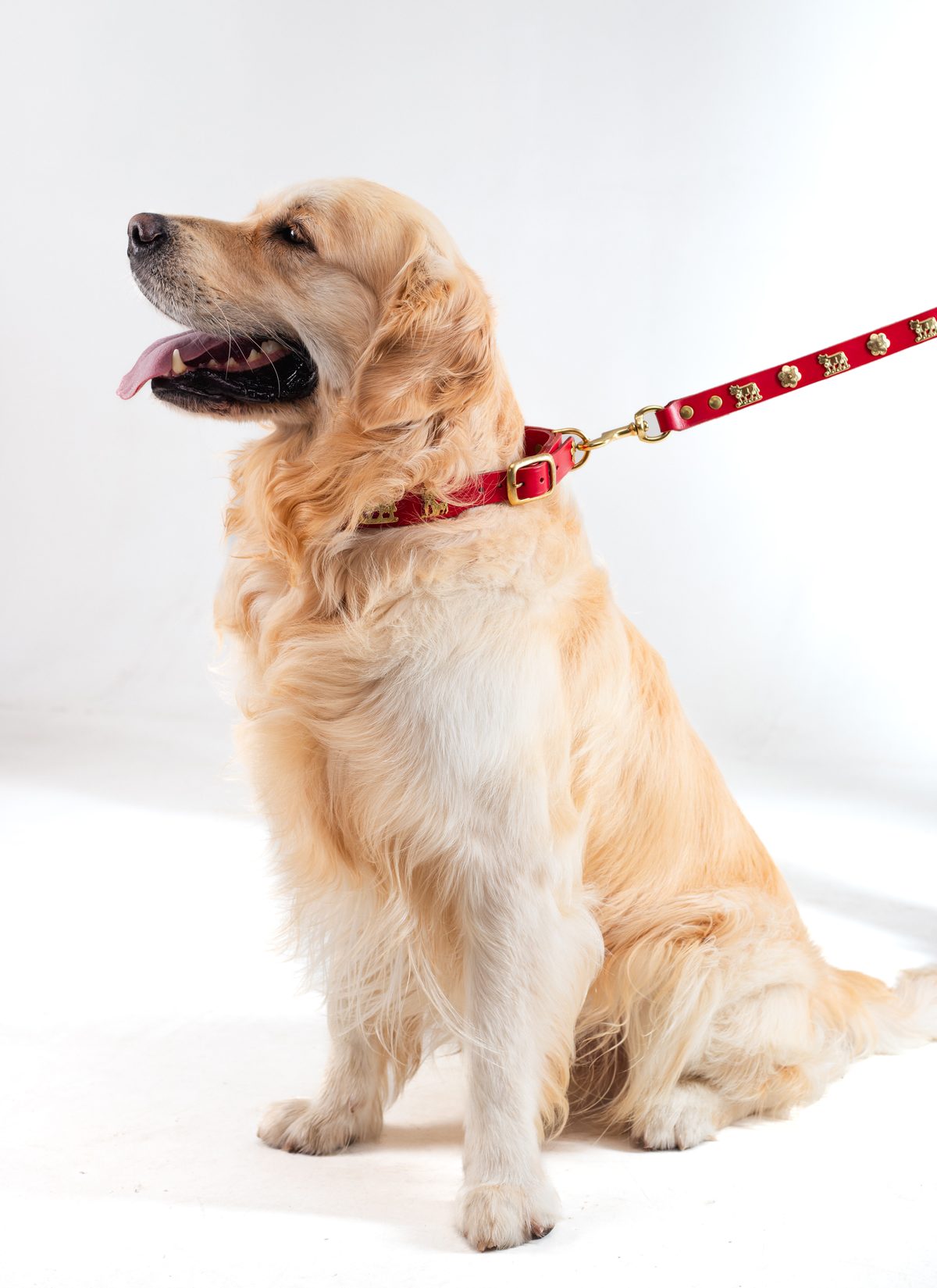
The lead is one of those accessories people overthink. And I get it: there are fixed leads, retractables, multi-position, tracking leads, leather, nylon, biothane… and they all claim to be «the best». I’ll tell you the same thing I tell whoever walks into the shop with that «I don’t know which to pick» face: there’s no perfect lead for every dog, there’s a perfect lead for each kind of walk. Let’s go.
Which lead do you need based on how you walk your dog?
Before thinking about brands and colours, stop two minutes and think about how you walk. Because that’s the real question. The same person can need two different leads for two different contexts during the day. My typical client, for example: lives in a city, walks the dog three times a day on pavements with traffic, and at weekends goes out to the countryside or to a big park. That person needs a fixed short lead for daily use and, optionally, a long lead for the countryside outings. One lead alone doesn’t cover both well.
The four big lead types map to four different scenarios: city and close control (fixed lead), relaxed walks in safe areas (retractable), trail running or hands-occupied with a pushchair/bike (hands-free), and training or recall work in open areas (long lead). The important thing is not using a lead for something it’s not designed for. A retractable on a busy street is a scare waiting to happen. A one-metre lead on a free-roaming dog in a huge field is a lost chance for the dog to enjoy itself. Each thing has its place.
When a client asks me «what lead should I get?», I always ask for context first. «What do you want it for?» is usually my first question. Everything flows from there.
Types of dog leads
These are the four formats that really matter, with their pros, cons and when I recommend each one.
Fixed lead (the safest for city walks)
The fixed lead is the classic one: constant length, normally between one and one-and-a-half metres, with a clip at one end and a handle at the other. It’s my default recommendation for daily city walking, no need to overthink. You get full control of the distance between your dog and you, it doesn’t get out of hand, and it prevents most scares: the dog doesn’t slip under a car, doesn’t chase the next dog, doesn’t walk into an oncoming bike.
For adult dogs that already walk well, a one-metre fixed lead is enough. If your dog is very small and you’re tall, look at the handle: padded or wide, because if you tug without meaning to (you trip, you stumble) the force lands on your dog’s neck or chest. The shock absorber is in your hand.
This is especially the lead I recommend for puppies starting out on walks. Don’t give them tons of freedom while they’re still learning: the first job of the walk is for the dog to get used to staying close to you, reading you and not chasing the first stimulus that passes by. For that, a short fixed lead —one metre at most— and patient work with treats whenever they walk by your side. Five-metre freedom (long lead, retractable or off-lead) comes later, when the puppy already understands that the walk happens with you, not just next to you.
Retractable lead (when yes and when no)
Here I start being honest, because this is the lead that raises the most doubts. A retractable lead is that format with a plastic casing and a tape or cord that winds and releases at the press of a button. It lets the dog have up to five or ten metres of movement without you having to move.
When yes: open parks without traffic, the countryside, empty beaches, or exploration walks in controlled areas. For small or medium dogs that don’t pull hard and that enjoy sniffing far from you. Also for senior dogs who need to go at their own pace without you pulling them along. In those contexts, a retractable dog lead is hugely comfortable and adds freedom.
When no: in a city with traffic, on narrow streets, in crowds, or with dogs that pull hard. For two reasons. First: the dog can build up speed over five metres and, when the tape snaps tight, they get a sharp jerk on the neck (if they wear a collar) or on the chest (if they wear a harness) that can hurt them. Second: the mechanism wears down and, especially on thin tapes, there’s real risk of friction burns if you grab it by hand to slow the dog. Friction burns, no exaggeration, I’ve seen it.
My shop expert’s tip: if you have a retractable, keep it as a complement, not as your only lead. And when you use it, do it in places where the dog can stretch five metres safely. For everything else, fixed lead.
Hands-free lead
The hands-free lead (also called multi-position or running lead) is the one you can sling across your shoulder or tie around your waist, leaving both hands free. It’s for runners who go out with their dog, for people walking with a pushchair or doing the shopping, or simply for anyone who needs their arms for something other than holding the dog. It usually comes with several rings and grips that let you reconfigure it as a long, short or waist lead depending on the moment.
My favourite in this category are the multi-position leather leads from Hunter. The investment pays off because you’ll use it for years and it adapts to everything. I recommend it especially for medium and large dogs with sporty or very active owners. For small dogs where you don’t need maximum strength, there are cheaper nylon options that also work well.
Long lead for training
The long lead is that five-, ten- or even fifteen-metre format that looks like a really long rope and that many people don’t even know exists. It’s the key tool for recall work (the dog comes when you call) in open areas without risk of the dog running off, and for training exercises where the dog needs freedom of movement but you need safety.
The long training lead clips to the harness, never to the collar (because a tug at ten metres on the neck causes serious harm), and you work with it letting the cord slide along the ground, gathering it when you need the dog closer. It’s a transition tool between the short lead and full freedom. When the dog responds well on a long lead, they’re ready for a fixed lead without tension; when they’re ready on a fixed lead without tension, they’re ready to be off-lead (where the law allows and it’s safe). Hunter’s Convenience is our default option: light, sturdy and available in five- or ten-metre versions depending on what you need.
Materials: nylon, leather and biothane
The lead’s material matters more than it seems, especially if you use it daily. What I see in the shop:
- Nylon or polypropylene. The cheapest and most common material. Sturdy, light, washable, fast-drying. The default for daily leads and for long leads (because lower weight matters when the tape is long). The downside: with dogs that pull hard it can burn your hand if you grab it bare-handed to slow them down.
- Leather. The premium option and, no contest, the best feel in your hand. Tanned leather is the most comfortable material when you carry the lead for many hours: it doesn’t scratch, doesn’t heat up, doesn’t slip like plastic, and doesn’t burn like nylon if you brake a tug. That’s what you really notice on long walks. A well-made leather dog lead lasts a decade, softens with use and ages beautifully. It’s what I recommend when someone wants to invest in a single lead for life. It needs minimal care (don’t soak it, condition it now and then) but in return it doesn’t break, doesn’t burn and gets better with the years.
- Biothane (polyester with PVC coating). The most modern material and the one growing fastest in sales. Mimics the feel of leather but it’s waterproof, doesn’t absorb smells and wipes clean with a cloth. It holds up well and is perfect for dogs that get wet often or for leads used in mud or grass. At Mascoboutique we currently only carry it in tracking leads (the long training ones), where it really pays off: a long cotton cord gets dirty and damp, a biothane one doesn’t. It’s a material we’ll probably expand to other formats in the future.
My practical summary: for daily use at fair price, nylon. For traditional high-end and feel, leather. For long tracking leads that get soaked and dirty, biothane.
How to combine lead and harness correctly
A lead alone doesn’t work — it always pairs with an attachment point on the dog. And here is where many people make mistakes that undo even the best lead. The right combination:
For small dogs, brachycephalic breeds (French bulldog, pug) and dogs that pull, the clip should always be on the harness, never on the collar. Pressure on a small dog’s neck with every tug is damaging in the medium term. I explained it in detail in our complete guide on how to choose a harness for a small dog: if you haven’t read it yet, I recommend you do, because lead and harness go together. For adult medium and large dogs that already walk well on a loose lead, the collar can do, but the harness is still more comfortable and safer for everyone.
Another key combination: lead length according to harness type. A no-pull harness (with a front clip) works best with a medium-length fixed lead; with a retractable you lose the no-pull effect because the dog builds up speed. A standard H-harness works with any length. And for long training leads, always the harness, never the collar: a tug at ten metres on the neck can cause serious cervical injuries.
And the clip: solid metal, with a safety lock, not plastic. Cheap plastic clips pop open with a knock and there ends the controlled walk. A good dog lead also shows in its clip.
Our pick of dog leads at Mascoboutique
When someone comes into the shop looking for a lead, these are the four models I recommend most. They cover the four main scenarios: city/daily, relaxed countryside walks, hands-free and training.
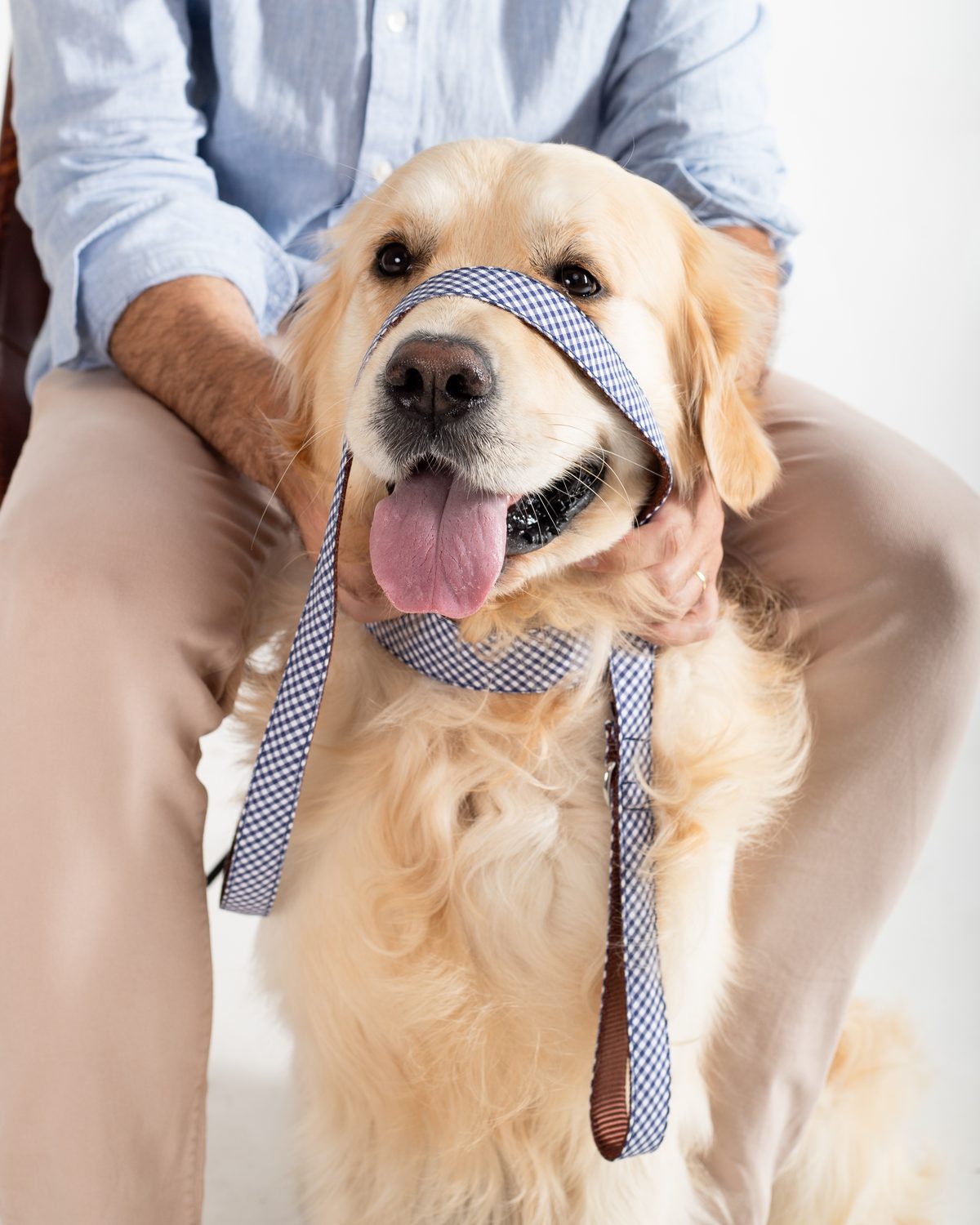
- Correa Fresa y Nata. By the Spanish brand Magia Mia. Our go-to fixed lead: light, handmade in Asturias, with a sturdy polypropylene tape and two-tone print. I recommend it as a daily lead for small and medium dogs, especially if you’re in and out of the house all day and need something that handles intensive use. €19.90.
- Flexi New Classic Tape retractable lead. By Flexi, made in Germany. It’s the retractable brand par excellence and, within them, the New Classic is the best value. Flat tape (not cord, which I find safer), ergonomic handle and reliable mechanism. I recommend it as a complement for relaxed walks in open parks or countryside, not as your only lead. Available in black, red or pink. €14.90.
- Hunting Brown Multi-position Leather Lead. By Hunter. This is the lead I recommend to sporty or very active owners who want the best lead for many years. Classic brown leather, several positions (short, long, waist, shoulder), very sturdy and designed for medium and large dogs. It’s an investment (€99), but you’ll use it for a decade.
- Convenience Green Tracking Lead. Also by Hunter. Our long lead for training or exploration walks in safe areas. Sturdy tape, light and comfortable to manage even at several metres. I recommend it to work on recall with your dog or simply to give them supervised freedom in the countryside. €24.90.
If you want more options, take a look at our dog leads section where you’ll also find matching collar-and-lead sets, summer editorial models and specific options for small dogs or large dogs. If torn between two models, message us on WhatsApp with the breed and the walk type and we’ll tell you which fits best.
In short
To get your dog’s lead right and not end up buying three:
- Start by thinking about how you walk, not by looking at leads. City / countryside / running / training are four different contexts.
- For daily city use: fixed lead of one or one-and-a-half metres. Don’t complicate it.
- Retractable: yes, but only for open areas without traffic and dogs that don’t pull. Never in the city.
- Hands-free: only if you’ll actually use it. If you don’t run or push a pram, you don’t need it.
- Long five- or ten-metre lead: the key tool for recall work in open areas. Always on the harness.
- Material: nylon for daily and fair price, leather to invest and best feel in your hand, biothane especially useful in long tracking leads that get wet and dirty.
- Clip the lead to the harness on small dogs, brachycephalic dogs and dogs that pull. The collar is for ID, not for pulling.
And if you’re still not sure which to choose, message us or come into the shop and we’ll help you pick the lead your dog needs. Better to ask first than to end up with three leads in a drawer you don’t use.
About the author
Mar is the founder of Mascoboutique. What began as an idea to dress and equip her own dog grew, over the years, into a reference boutique in Madrid for families with dogs. Every lead, harness or collar that comes into the shop passes through her hands first: she tests the materials, looks at the stitching and pictures the dog that will wear it. That old-school shop expert’s eye is what she also applies to the blog: here we don’t recommend what sells best, we recommend what she would put on her own dog.